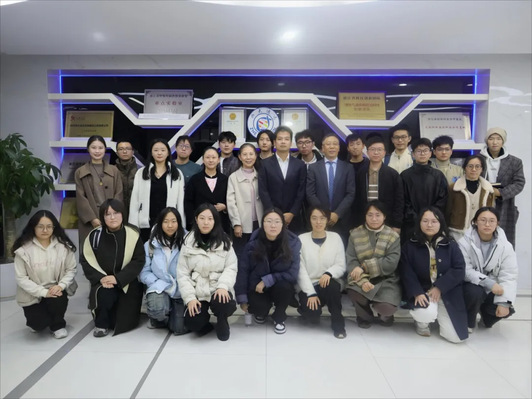
On 4 December 2025, a delegation of 30 UG and PG students from ZJE, led by Assistant Dean Yuan Yuan and student counsellors, visited Hangzhou Zheda Dixun Biological Gene Engineering Co., Ltd. Chairman WU Shandong, Chief Scientist SUN Yi, Technical Director LIU Yi and General Office Director LING Yun welcomed the delegation, accompanied the site visit, and joined a discussion session.
Dixun
A Little Giant Enterprise Emerging from ZJU
Hangzhou Zheda Dixun Bio-Genetic Engineering Co., Ltd. was established in January 2004, specializing in the research and application of “omics and precision medicine” for allergic diseases.
The company is a discipline-oriented high-tech enterprise jointly founded by Zhejiang University and overseas returnees. It currently employs 8 professors (including 1 National High-Level Science and Technology Leading Talent, 3 Zhejiang Provincial High-Level Science and Technology Leading Talents, and 2 Zhejiang Provincial Outstanding Engineers) and 6 foreign experts.
The company operates five provincial-level research platforms and is recognized as a high-growth enterprise in Zhejiang's biomedical industry. It serves as the technology transfer and research base for Zhejiang University's Allergy Research Center, as well as the industry-academia-research base for the Allergy Medicine Committee of the Chinese Research Hospitals Association.
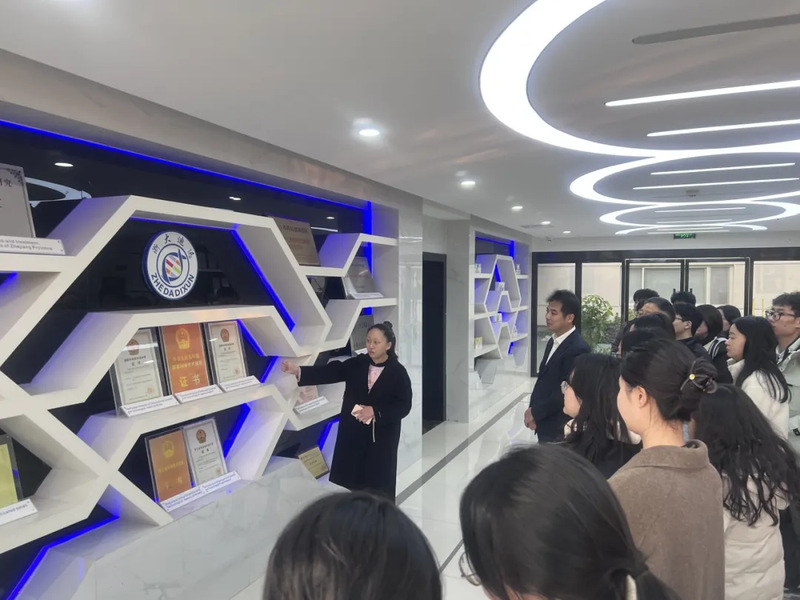
On-Site Visit: From Production Line to Laboratory
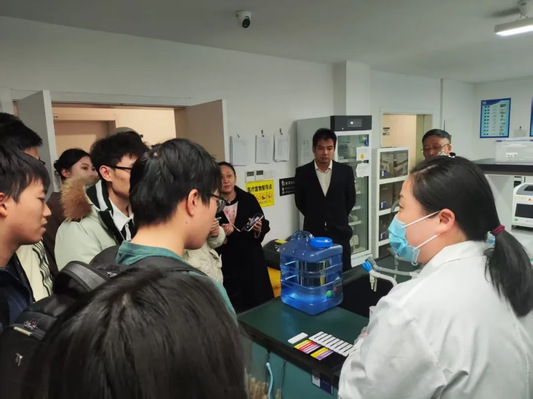
Accompanied by company representatives, faculty and students toured the production line and laboratory. They gained firsthand insight into the manufacturing and quality control processes for core products such as allergen detection kits and automated Western blot analyzers, experiencing the company's complete industrial chain—from antigen preparation and reagent production to equipment integration.
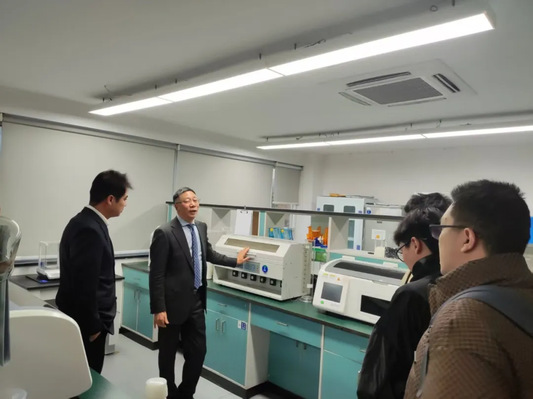
In the labratory, the technical lead presented the latest research initiatives in allergen molecular identification, biomarker discovery, and multi-omics data integration, fully embodying the development model characterized by deep integration of industry, academia, research, and application.
Symposium: Cutting-Edge Developments
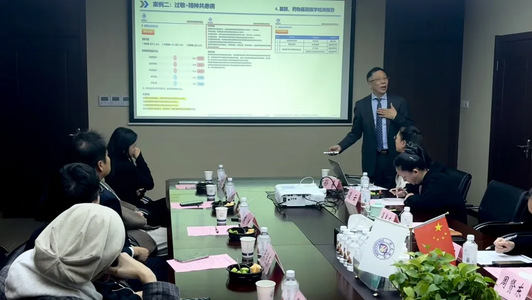
During the symposium exchange, Chief Scientist Sun Yi presented on “The Path from Research to Product,” detailing how Dixun transforms fundamental research findings into approved diagnostic products through engineering development. Chairman Wu Shandong delivered a presentation titled “Precision Medicine Applications in Allergy Diagnosis and Treatment,” using clinical cases to illustrate the role of multi-omics technologies in personalized diagnosis and intervention. He also shared his entrepreneurial journey and highlighted the significance of university-industry collaboration in bridging research with industrial chains and cultivating practical talent within discipline-based enterprises.
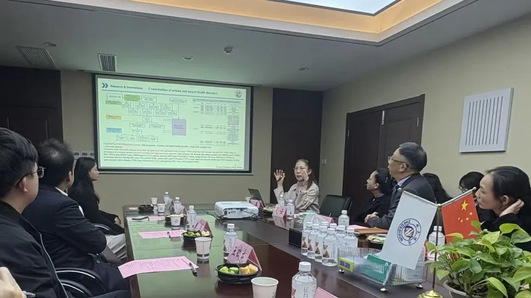
During the interactive discussion session, faculty and students engaged in lively exchanges on topics including industry trends, talent demands, internship opportunities, employment prospects, and career planning. Key areas of focus encompassed “promising directions within the biopharmaceutical sector,” “the value of international experience,” and “interdisciplinary skills required for precision medicine research and development.” Attending experts addressed each point in turn, encouraging students to strengthen their foundational knowledge, broaden their interdisciplinary perspectives, and actively participate in industry-based practical experiences. These steps, they emphasized, would lay a solid groundwork for future careers in the life sciences and healthcare field.
Personal Reflections
This visit to Dixun provided me with a more tangible understanding of the concept of a “discipline-based enterprise.” While touring the production line and laboratories, I observed how the company transforms complex multi-omics data into standardized diagnostic reagents and leverages fully automated Western blotting instruments to achieve high-throughput testing. This experience gave me a firsthand sense of the practical implementation of the “industry-academia-research-application” integration model.
During the symposium, Chairman Wu's practical case study left a profound impression. He explained how his team, through clinical cohort and multi-omics analysis, revealed that allergic reactions can trigger psychiatric symptoms like anxiety and depression via neuro-immune crosstalk. This case underscored that the true value of research lies not merely in publishing papers, but in addressing genuine clinical needs and solving unmet health challenges for patients. This visit reinforced my conviction that whether pursuing deepening research or advancing industrial applications, one must uphold the mindset of “solving real problems” to conduct meaningful, actionable scientific research. (Dong Yuning)
What particularly resonated with me was the company's well-established operational model for balancing fundamental laboratory research with clinical needs, and for fostering cross-level collaborative innovation by linking universities, hospitals, and upstream/downstream industry partners. Centered on genuine clinical needs, each partner leverages its strengths: universities focus on theoretical breakthroughs, hospitals provide clinical scenarios, and enterprises lead technology transfer and industrialization. Case studies like allergy-psychiatric symptom linkage research demonstrate this model's remarkable success in balancing academic depth and practical value.
In-depth discussions with Professor Wu clarified the intrinsic logic linking scientific innovation and industrial application. This visit not only deepened my understanding of the operational model of “disciplinary enterprises” but also provided crucial insights for my future career direction. (Rong Zining)
As a high-tech enterprise specializing in “omics and precision medicine” for allergic diseases, Dixun has integrated disciplines and industrial transformation to establish a complete industrial chain from laboratory research to market application. The company's range of allergen detection kits and related equipment vividly demonstrates how technological innovation translates into practical medical products. Particularly impressive was the development of high-throughput fully automated immunoblotting instruments, which not only enable simultaneous detection of multiple antigens but also significantly reduce manual operational errors.
The real-world case studies shared by Professor Wu provided me with a vivid understanding of the critical role of multi-omics testing in precision allergy diagnosis and treatment. The integrated analysis spanning genomics, proteomics, and metabolomics not only assists physicians in making more accurate diagnoses but also delivers truly personalized treatment plans for patients. (Zhang Yuanti)
The Corporate Visit programs aim to deepen students' understanding of leading life science enterprises. By bridging classroom learning with industry practice, it enhances professional competence and career planning skills, empowering students to grow into biomedical innovators with global perspectives and a commitment to China's practical needs.